Electric Vehicle v2
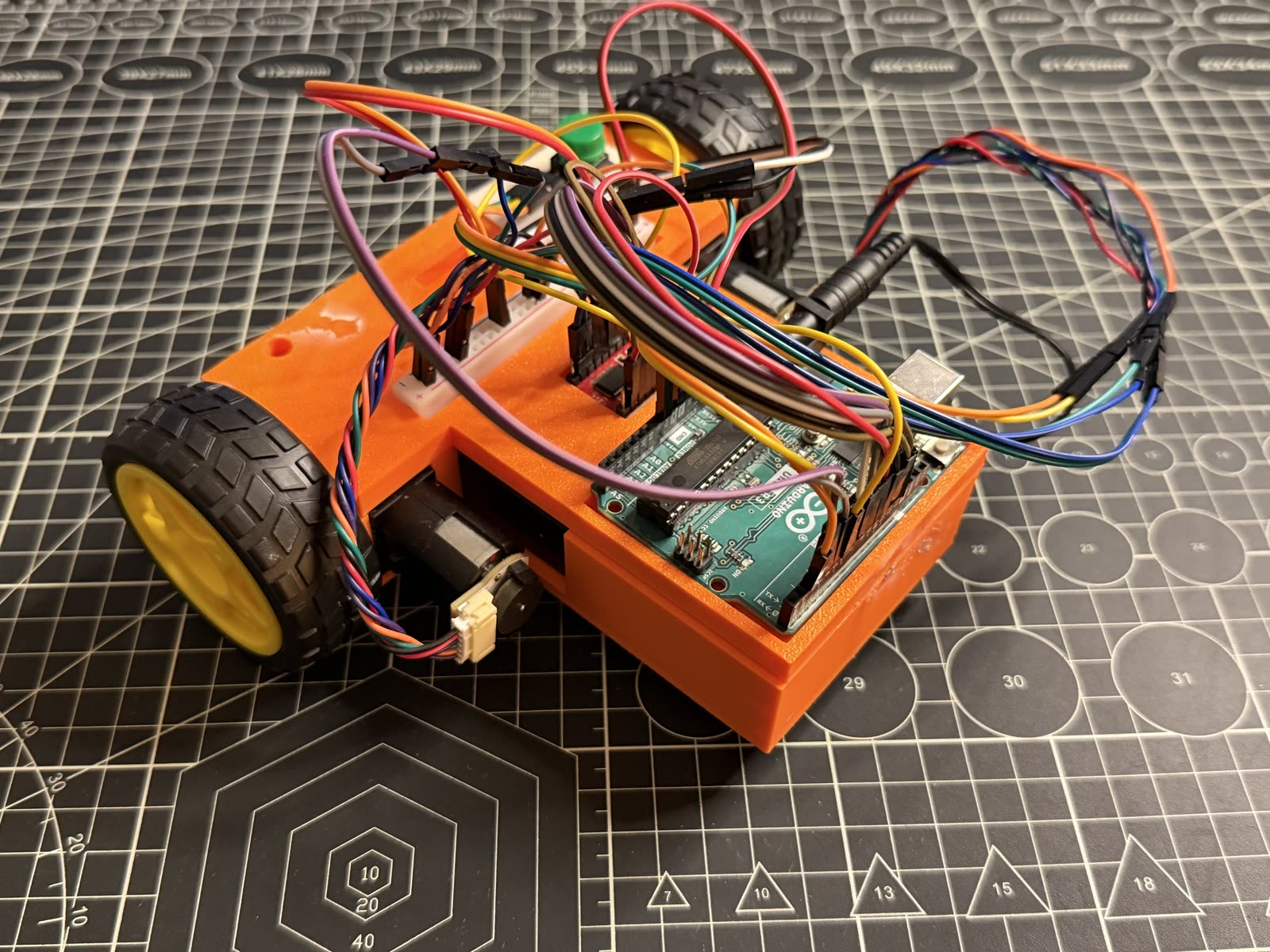
A compact two-wheel-drive electric vehicle on a self-contained 3D-printed body.
01 The problem
The first version drove, but it was bulky and held together loosely, so parts moved around while it ran. For v2 I wanted a smaller vehicle with a real body that kept the electronics in fixed spots.
02 Why I built it
After the Science Olympiad vehicle build, I wanted to make a cleaner version on my own. The loose frame on v1 was the part that bothered me most. Designing the body in CAD also let me practice 3D printing, which I wanted to get better at.
03 Tools, materials & software
| Microcontroller | Arduino Uno |
|---|---|
| Drive | 2× TT gear motors with built-in encoders and yellow-hub wheels |
| Structure | Custom 3D-printed box chassis |
| Prototyping | Breadboard + jumper wires |
| Motor driver | TB6612FNG dual motor driver |
| Power | 8 AA batteries |
| Software | Arduino IDE (C++) |
04 Prototype photos
The compact v2 chassis and its internals. Tap any photo to view it larger.
05 CAD & diagrams
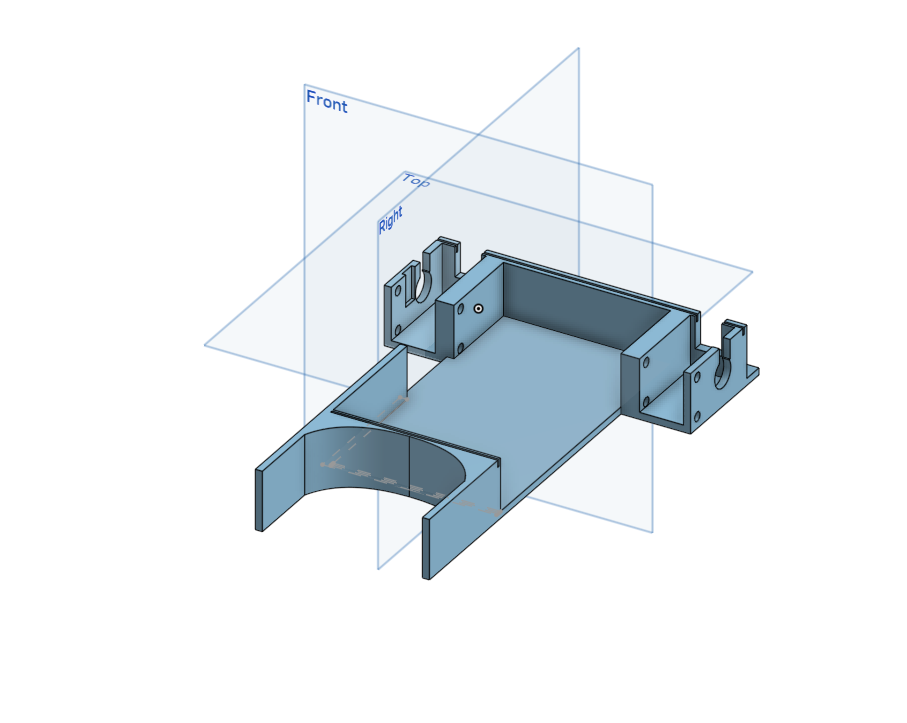
I designed the chassis in CAD before printing it. It has a flat bed for the board and battery, bracket walls with holes to hold the axle, and a curved cutout on one end for the motor.
06 Testing process
After the chassis was printed and the electronics were in, I ran the vehicle to check the fit and see how it drove. When a part did not line up or the code needed a tweak, I made small changes and tried again.
07 Challenges & failures
The hardest part was getting it to drive straight. Without a gyro, it couldn't correct its own steering, and small differences between the two motors made it drift to one side. Getting the timing and distance right was tricky too, so I kept adjusting the code until it stopped near where I wanted.
08 What I changed after testing
The biggest change from v1 was the body. Instead of a loose frame, I designed a compact printed box that holds the board, battery, and motor in fixed spots. That made the vehicle smaller and stopped parts from shifting while it ran.
09 Final result
The finished v2 was smaller and much tidier than v1. Everything had its own place in the printed chassis, so it held together better and was easier to carry and work on.
10 What I'd improve next
I'd spend more time on the code and run more tests to find the best settings. With enough tuning, I think I could get it to drive straight and stop at the right distance more consistently.